Spring shoots
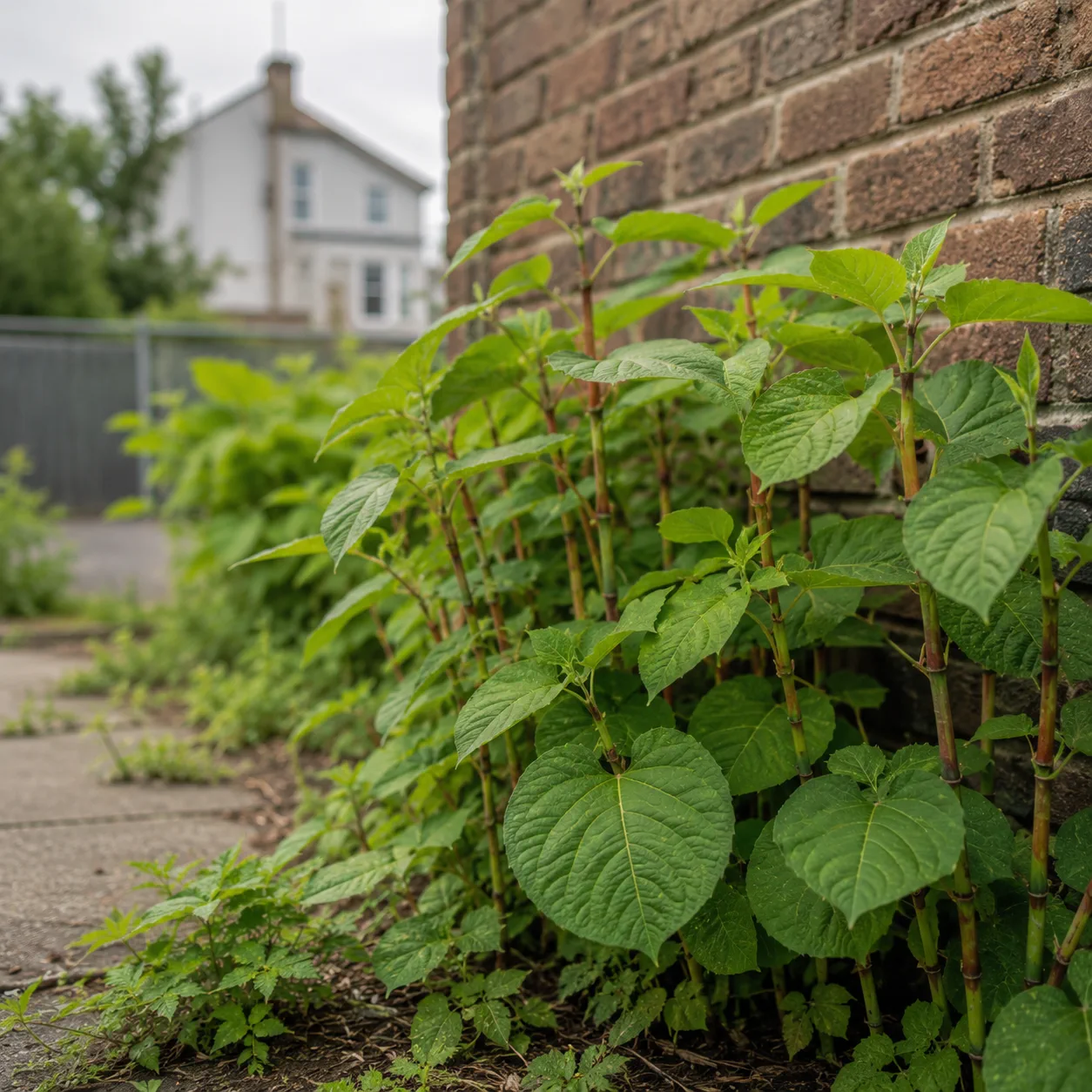
Red or purple asparagus-like spears push through the ground from March onwards, often from the same spot each year. They grow quickly and unfurl rolled green leaves as they rise.

Maintaining Your Property
Japanese knotweed is a fast-growing invasive plant introduced to Britain as a Victorian ornamental and now established across the country. It spreads through an underground rhizome system rather than seed, which is why it is difficult to remove and why it carries weight in property transactions. Here is how to recognise it, what it can genuinely damage and where you stand.
Why it matters
Up to 10cm
A day is the growth rate the plant can reach at the height of the season.
2–3m
The height the canes commonly reach by mid to late summer.
3 growing seasons
A typical herbicide treatment programme runs across several years, not weeks.
Identifying it
Red or purple asparagus-like spears push through the ground from March onwards, often from the same spot each year. They grow quickly and unfurl rolled green leaves as they rise.
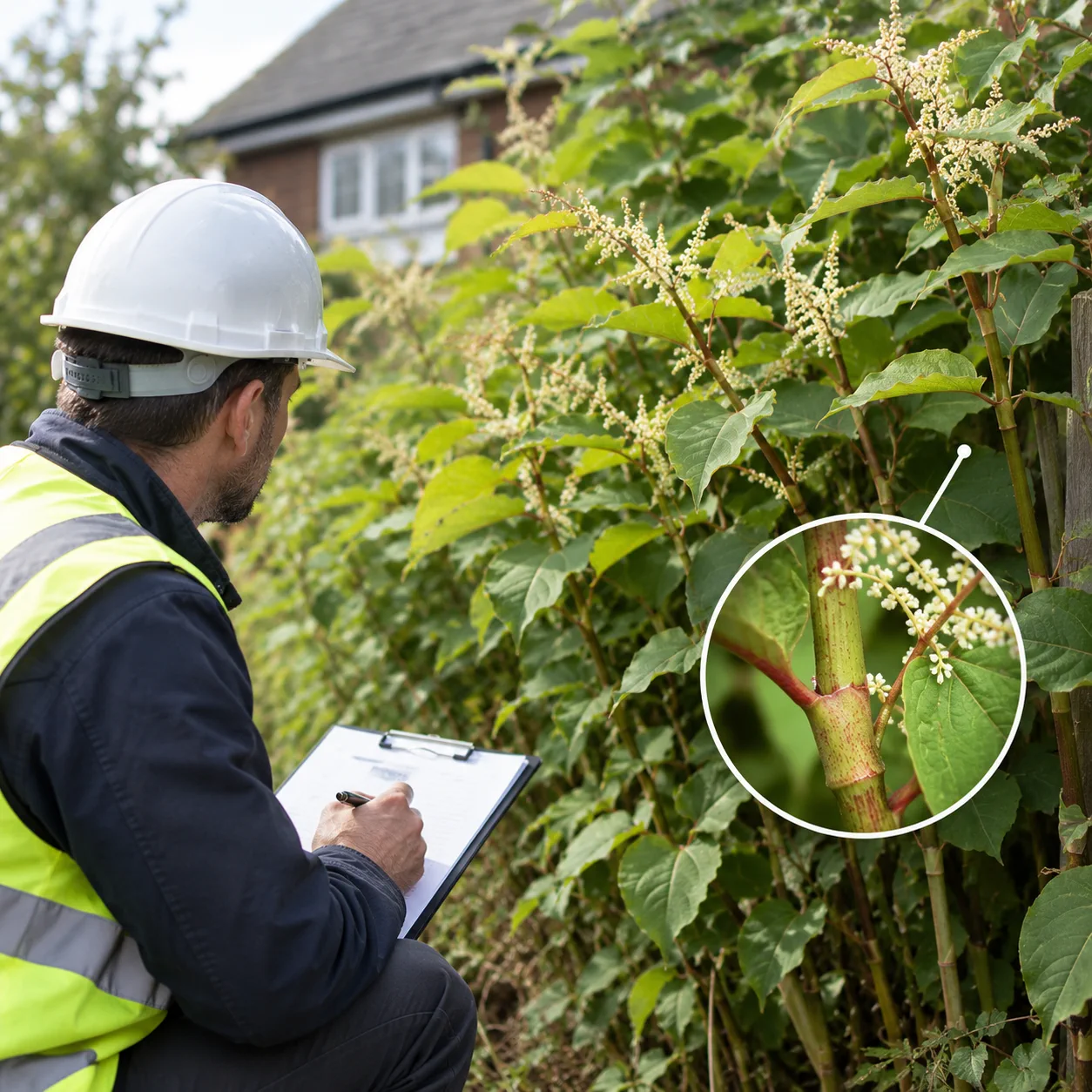
Hollow, bamboo-like canes with purple speckling, reaching two to three metres. Leaves are shovel or heart-shaped with a flat base, arranged in a distinctive zig-zag along the stem.
Clusters of small creamy-white flowers appear from around August through to September, hanging in loose sprays from the leaf joints.
The plant dies back to brown, brittle canes that can stand through winter, and the crown survives underground. Absence of visible growth in winter does not mean the plant has gone.
What it can damage
The rhizome system exploits existing weaknesses. Cracked drain runs, joints in tarmac and block paving, and gaps under patios are where problems most often appear.
Garden walls, outbuildings, conservatory bases, garages and fence lines are more vulnerable than the main structure of a well-built house.
Dense stands crowd out other planting, block access and take over usable outdoor space. This is a genuine loss even where nothing is physically damaged.
Where you stand legally
There is no legal requirement in England and Wales to remove Japanese knotweed from your own land. What matters is what you do with it and whether you let it spread.
Under the Wildlife and Countryside Act 1981 it is an offence to plant or otherwise cause Japanese knotweed to grow in the wild. Allowing it to encroach on a neighbour can also give rise to a private nuisance claim.
Under the Environmental Protection Act 1990, knotweed material and contaminated soil are controlled waste. They must be handled by a registered carrier and taken to a permitted site — not to the tip or the green bin.
The TA6 Property Information Form asks directly about Japanese knotweed. Answering incorrectly, or answering 'no' without reasonable grounds, exposes a seller to a misrepresentation claim after completion.
General guidance only, and not legal advice. Where a dispute with a neighbour, a nuisance claim or a disclosure question arises, take advice from a solicitor on the specific facts.
What not to do
Treatment and removal
The most common route. A specialist applies herbicide across several growing seasons, usually around three, with monitoring visits in between. It is the least disruptive and least expensive option, but it takes years rather than months and the ground stays restricted while it runs.
The rhizome is dug out and taken to a permitted landfill site. It is fast and gives certainty, which suits development or an imminent build, but landfill and haulage make it by far the most expensive approach.
Material is buried at depth or relocated within the site, contained by a root barrier membrane. It avoids landfill costs where there is space to do it, and the location must be recorded for any future work or sale.
Whichever method is used, the paperwork matters as much as the work. Lenders typically want a treatment plan from a contractor belonging to a recognised trade body, backed by an insurance-backed guarantee that survives if the contractor ceases trading.
Buying, selling and lending
What a survey establishes
We record what is actually present, where it is growing, how far it extends and whether it originates on the property or on adjoining land — the questions a lender and a solicitor will both ask.
Boundary walls, drains, hard standing, outbuildings and the main structure are assessed for actual damage rather than assumed risk, so the response is proportionate to what is there.
A written record with photographs and a clear recommendation gives buyers, sellers, lenders and solicitors the same factual basis for negotiating, instructing a specialist or proceeding.
Timing and boundaries
Common questions
Look at the stem and the leaf together. Hollow bamboo-like canes with purple speckling, shovel-shaped leaves with a flat base set in a zig-zag pattern along the stem, and creamy-white flower sprays in late summer are the reliable combination. Russian vine, bindweed and bamboo are the usual false alarms.
It exploits weaknesses that already exist rather than breaking through sound structure. Drains, joints in tarmac and paving, boundary walls, outbuildings and conservatory bases are where damage most often shows. Serious damage to the main structure of a soundly built house is uncommon.
No. There is no obligation to remove it from your own land. It is an offence to plant it or cause it to grow in the wild under the Wildlife and Countryside Act 1981, the material is classed as controlled waste, and allowing it to encroach on a neighbour can lead to a nuisance claim.
Yes. The TA6 Property Information Form asks about Japanese knotweed directly. A false or unsupported answer can lead to a misrepresentation claim after completion, so answer honestly and disclose any treatment history and guarantee.
Often, yes, though it depends on the lender and the circumstances. Most will want a professional treatment plan from a contractor belonging to a recognised trade body, backed by an insurance-backed guarantee. Expect the process to take longer than a standard purchase.
A herbicide programme typically runs across around three growing seasons with monitoring visits in between. Excavation and removal is far quicker but considerably more expensive because of haulage and licensed landfill costs.
It is rarely successful and easy to make worse. Cutting or strimming spreads rhizome fragments, and moving contaminated soil spreads the problem across the garden. Disposal is also legally controlled, so a specialist contractor is the sensible route.
It can, particularly where treatment is outstanding or no guarantee is in place. Once a management plan and insurance-backed guarantee exist, lenders and buyers usually treat it as a known and priced issue rather than a reason to walk away.
Keep reading
Maintaining your property
What causes ground movement, how to tell subsidence from settlement, and the maintenance that reduces risk.
Read MoreMoving Home
Whether a survey is compulsory, what a lender's valuation leaves out, and when each survey level makes sense.
Read MoreMoving Home
What to check before, during and after a viewing, from roof and brickwork to damp, services and boundaries.
Read More