Renegotiate the price
Adjust your offer to reflect the cost of putting the defect right, using the report as evidence rather than opinion.

Moving Home
Buying your dream home, or taking on a fixer-upper? Whatever your plans for a property, you want to know you are making a good investment. A survey offers that reassurance at several different levels of detail.
The legal position
No survey is legally required. It is arranged and paid for by the buyer, usually once an offer has been accepted, and the decision to have one is entirely yours.
Properties presented to the open market require a Home Report, which includes a survey. It is instructed and paid for by the seller. New builds, private sales and unique buildings are excluded.
What a house survey is
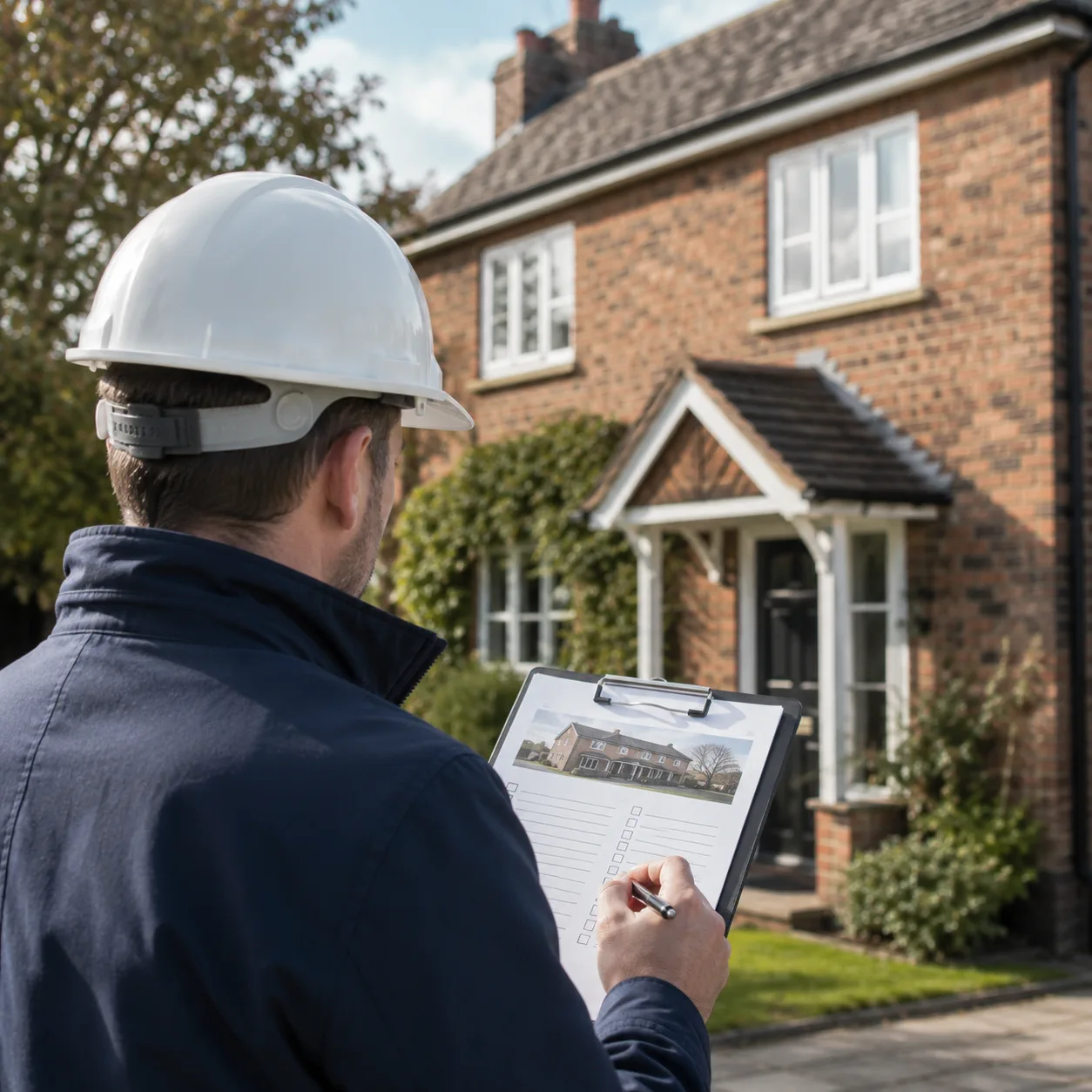
Depending on the survey you choose and the options you select, the surveyor assesses key aspects of the property including structural condition, visible defects and potential problems. The findings go into a written report so you understand the true condition of a property before you commit, and the report may also set out recommended repairs, suggested timelines and the consequences of delaying action.

The benefits
Once you sign the sales contract, you will not have the option of going back to the seller about defects or urgent repairs that a survey would have uncovered.
If problems are found
Adjust your offer to reflect the cost of putting the defect right, using the report as evidence rather than opinion.
Insist the problem is resolved before you complete, so you are not inheriting a repair on day one.
Pull out of the purchase altogether if the condition risks outweigh what the property is worth to you.
The risks of not having one
Issues arise in listed buildings and modern new builds alike. A survey cannot predict future problems, but it tells you what already needs fixing.
Problems commonly develop in walls, roofs and even foundations, and they rarely announce themselves during a viewing.
Damp, tree-root damage, rotten window frames, faulty electrics and inadequate drains are all realistic possibilities.
Replacing a roof in the UK averages around £7,000, and many homeowners spend £19,000 or more, so you want that flagged before you complete.
Identifying issues formally can let you renegotiate with repair costs factored in, or insist the seller carries out the work. Without that, you could be left with a crippling repair bill or a home worth less than you paid for it.
Common situations
Yes. A lender's valuation is carried out for the lender, not for you. It focuses on market value and risk to the lender, reported to that lender's requirements, and may not highlight any or all defects. A survey is a detailed assessment of condition that can uncover expensive problems a valuation would never mention, and it gives you something to negotiate with.
There is no legal requirement, but it is still advisable. Buying carries risk however you fund it, and any problem that needs fixing is solely yours. Repair costs can run to several thousand pounds. Set against the price of the property, a survey is a small investment for the peace of mind it provides.
New builds are not exempt from problems or poor workmanship, even when they look pristine. Surveys are not a legal requirement, but a snagging survey is the common way to check that the completed work meets the standard the builder agreed to.
No. Nothing in law obliges a buyer to commission a survey, and a purchase can complete without one. What your lender will insist on is a valuation, and that is a different exercise carried out for a different party.
Once your offer has been accepted and before contracts are exchanged. That window is the only point at which you can still act on the findings — renegotiate, ask for work to be done, or withdraw without penalty.
Findings are graded by severity, so you can see what is urgent and what is routine maintenance. From there you can renegotiate the price, ask the seller to carry out the work, commission a specialist report on a specific defect, or step away from the purchase.
Home Buyer/Level 2 suits conventionally built homes in reasonable condition. Building/Level 3 surveys suits older, larger, altered, neglected or non-standard properties, and anything where you have already seen warning signs. The age and complexity of the building should decide it, not the price of the survey.
Choosing the right survey
Tell us about the property and we will help you match it to the right level of inspection, whether that is a home buyer condition survey, a full building survey or a snagging survey on a new build.
Keep reading
Moving Home
How a HomeBuyer/Level 2 surveys compares with a Building/Level 3 surveys, and which suits your property.
Read MoreMoving Home
The different types of surveyor, what happens during an inspection, and the defects they are looking for.
Read MoreMoving Home
Typical time on site, how long the report takes to arrive, and what makes an inspection run longer.
Read More