The old 25-year assumption
When panels first appeared on UK homes, the payback period was widely quoted as around 25 years — effectively the lifespan of the system itself. That maths is what kept most homeowners waiting.

Energy Efficiency
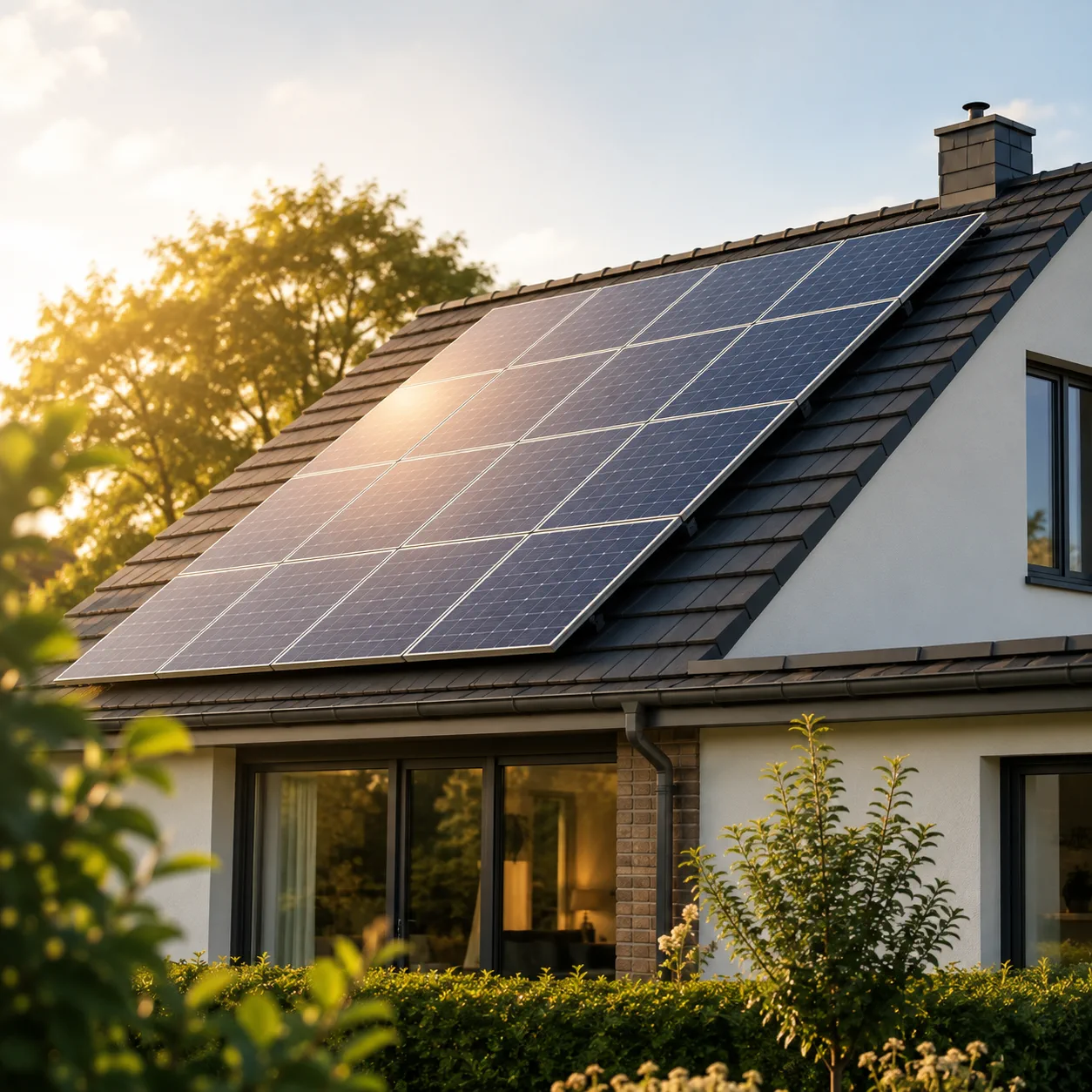
When solar panels first appeared on UK homes, most owners took a wait-and-see approach — the technology was new and the cost-benefit analysis simply did not stack up. Falling installation costs, better efficiency and a very different picture on energy prices mean it is worth looking again.
Why the case changed
Between 2010 and 2019 the cost of a solar panel installation dropped by 82%, with a further reduction of around 15% reported over the following three years. Supply chain disruption and container shipping costs have limited further falls, but the direction of travel is clear.
Technological advances, economies of scale and a sustained energy crisis have taken the industry from slow-burn to full order books, with many installers booked months ahead. Every rise in the import tariff shortens the payback on generating your own.
Installation costs
Cost: £5,500 – £6,500
The typical installed cost for a large semi-detached or small detached house, covering panels, mounting and the inverter that converts the output for household use.
Cost: Added cost
Diverts surplus generation into the hot water cylinder instead of exporting it, which can cover most of a household's hot water through the warmer months.
Cost: Added cost
Stores daytime generation for use in the evening. Worth considering if the house is empty during the day, when most of the output would otherwise be exported.
Cost: Added cost
Lets you put generation into a vehicle rather than the grid. HMRC's advisory electric rate sits at around 8p per mile, though charger costs vary widely.
Figures are industry guide prices intended to illustrate the shape of the investment. Quotes vary by property, roof type and installer, and energy tariffs move frequently — always price a system against current rates.
Energy and cost savings
Energy requirements vary enormously between appliances. One kilowatt hour buys you any of the following:
A typical house has a base load of around 0.35 kWh — fridges, routers and everything sitting on standby. Beyond that, it makes sense to run appliances during the day so you use what the system is producing rather than buying it back later.
Anything left over once domestic needs are met is sold back to the grid, but at well below the import tariff — typically around 17p per unit to export. Batteries are the alternative, holding generation back for use when you are actually at home.
The import rate
12.7p
Cost of a kilowatt hour of imported electricity in 2010.
19.4p
The same unit by 2019 — a 53% increase in nine years.
34p
The more recent figure, against installation costs that keep falling.
Payback periods
When panels first appeared on UK homes, the payback period was widely quoted as around 25 years — effectively the lifespan of the system itself. That maths is what kept most homeowners waiting.
Take 4,000 kWh of annual generation at 19p per unit and you get a headline saving of roughly £760 a year. Nobody uses everything they generate, so a realistic figure is closer to £550, rising back above £600 once export payments are added.
Installers commonly quote a payback period of six to eight years. Allowing for real-world usage patterns, ten years is the more realistic planning figure — and it will move again as government support for energy costs changes.
Modern panels are typically guaranteed to hold 82% to 85% of their efficiency for 25 years after installation. If you want more capacity later, you can usually add to an existing array rather than replace it.
Aspect and add-ons
A solar-powered immersion heater picks up generation that domestic use has not absorbed and turns it into hot water. Households running that setup often report switching off gas central heating for around six months of the year. Add an app and a charge point and you can decide, day by day, whether to charge the car, heat the water or export.
Security of supply
Panels add load and involve fixings through the covering. A survey establishes whether the roof structure, tiles and battens are in a condition to carry an array, or whether repairs should come first.
Aspect drives output. Modern panels generate from daylight rather than direct sun, but the difference between elevations is real and needs to be understood before you commit.
On a property you are buying, the age, condition and ownership of any existing array matters — particularly where a rent-a-roof arrangement is in place, as lenders have historically taken a cautious view.
Common questions
The case is far stronger than it was a decade ago. Installation costs fell by around 82% between 2010 and 2019, with roughly a further 15% coming off in the three years after that, while the unit price of imported electricity moved in the opposite direction. For most households the question is now about payback period and usage patterns rather than whether the technology stacks up at all.
As a guide, a 3.5 to 4 kW array with an inverter costs between £5,500 and £6,500 on a large semi-detached or small detached house. Immersion diverters, battery storage and EV charge points all add to that figure, but they also increase how much of your own generation you actually use.
A 3.5 to 4 kW system typically generates between 3,500 and 4,800 kWh a year. For context, a family of four in a three-bedroom house who are out at work all day use in the region of 3,200 kWh annually, so a system of that size covers a substantial share of normal household demand.
Installers generally quote six to eight years. A more cautious planning assumption is around ten years, because no household consumes all of its own generation and surplus is exported at a much lower rate than the import tariff — typically around 17p per unit.
No. Panels are now efficient enough to generate from daylight rather than requiring direct sunlight. Installer data indicates a north-facing roof produces around 60% of what an equivalent south-facing roof would deliver, and that shortfall can often be offset by fitting additional panels.
Self-generation offers a degree of security of supply and more certainty on cost, and EPC ratings are becoming more important to buyers and lenders alike. Both point towards a positive effect on value, though the condition of the roof and the terms of any existing installation still need checking on a purchase.
Before the panels go up
Panels are a long-term investment fixed to the part of the building you can see least of. We can assess the roof structure, covering and condition, and flag any repairs worth completing before an array is installed — or report on an existing system if you are buying.
Keep reading
Energy efficiency
Where heat escapes, which insulation measures repay the outlay, and indicative costs and annual savings.
Read MoreMaintaining your property
What an extension or conversion adds, what it costs, and the site factors that decide whether it works.
Read MoreMoving Home
Whether a survey is compulsory, what a lender's valuation leaves out, and when each survey level makes sense.
Read More